What can you do on this screen?
On the Configuration screen, you can set up the details for a specific LEAD instance/install. This includes the settings for the system administrator email address, time limits, and email server settings, among several others.
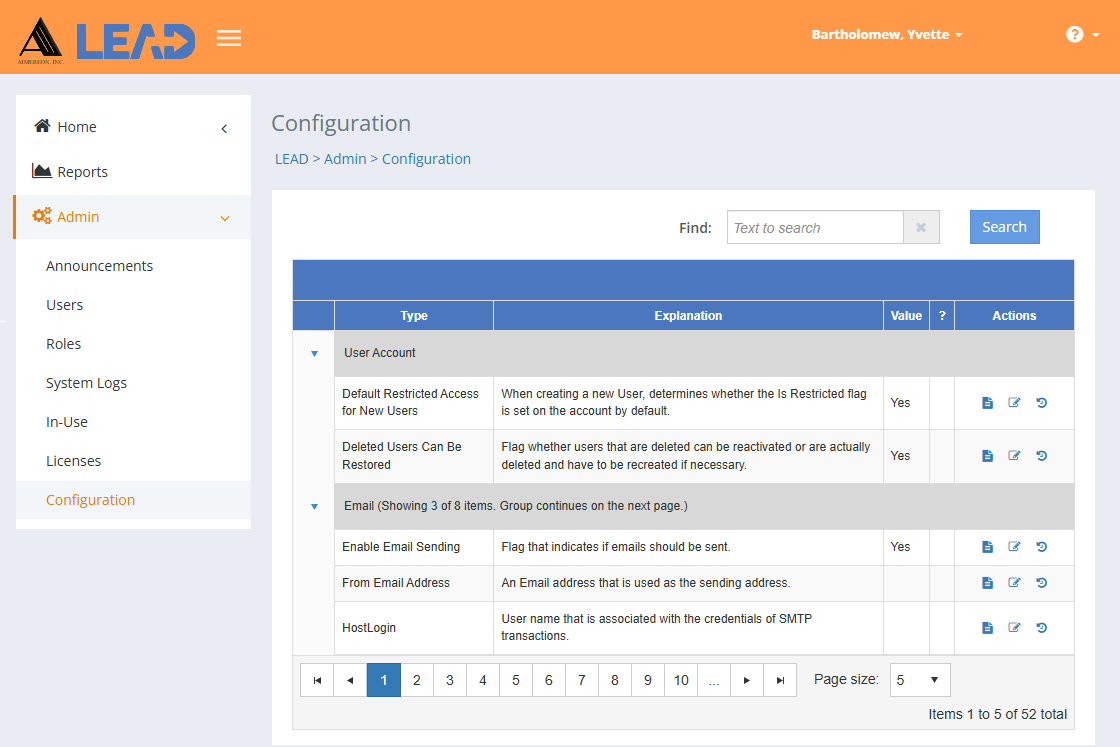
Figure 464: LEAD Administrator - Configuration
The configuration settings are organized in groups on the screen:
•User Account - includes options for restricted access for new users and how to handle deleted users.
oDefault Restricted Access for New Users - When creating a new user, determines whether the Is Restricted flag is set on the account by default. You can set the Value entry to Yes or No.
oDeleted Users Can Be Restored - Flag whether users that are deleted can be reactivated/restored or are actually deleted and have to be recreated if necessary. You can set the Value entry to Yes or No.
•Email - includes the settings for email. If the entered email addresses don't pass validation, you will see an announcement to notify you of the problem.
oEnable Email Sending - Flag that indicates if emails should be sent. You can set the Value entry to Yes or No.
oFrom Email Address - An email address that is used as the sending address. You can enter any properly formatted email address in the Value field.
oHostLogin - User name that is associated with the credentials of SMTP transactions. You can enter text in the Value field.
oHostPassword - Password that is associated with the credentials of SMTP transactions. You can enter text in the Value field.
oHostPort - Port that is used for SMTP transactions. You can enter a non-negative integer in the Value field.
oHostServer - Name or IP address of the host that is used for SMTP transactions. You can enter text and numbers in the Value field.
oSystem Admin Email Address - List of Email address(es) of system admin(s). All addresses receive emails regarding account changes and requests. The first address is used as the sending address. Enter the required email address(es), separated by ';'. You can enter any properly formatted email addresses in the Value field.
oUseSSL - Flag whether to use SSL encryption when communicating with the mail server. You can set the Value entry to Yes or No.
•Versioning Options - includes the default options to be checked, when a user versions the initiative.
oVersion COI When Versioning Initiative - Default value whether to version all of the table of contents items when versioning a initiative. This is just the default that is used on the Versioning Options screen. Set the Value to Yes to version the entire table of contents by default, otherwise set to No.
oVersion Skills When Versioning Initiative - Default value whether to version all of the skills when versioning a initiative. This is just the default that is used on the Versioning Options screen. Set the Value to Yes to version all the skills by default, otherwise set to No.
•Printing - includes the font and font size to use when generating outputs from LEAD, as well as the lowest level of Table of Contents item to output in the table of contents of the PG.
oPG Table for Contents Hierarchy Level - Determines the lowest level to output in the Table of Contents in the Participant Guide. You can set the Value entry to 1 (Course), 2 (Module), 3 (Lesson), or 4 (Section).
oPrinting Font Name - Standard font name that is used in the various PDF outputs. You can enter the name of the font in the Value field.
oPrinting Font Size - Standard font size that is used in the various PDF outputs. You can enter a non-negative integer in the Value field.
•Directories - includes the location for web-based help, when installed in a non-standard location.
oWeb Help Root URL - The URL to use for accessing the help files, if stored in a different location. You can enter the location in the Value field.
•Debugging - includes options for debugging issues in LEAD. This should only be changed by direction from Aimereon, Inc..
oDebug Database Output - Flag that indicates if debug entries should be added to the System Log area of the database. This should stay No as it may slow down the software in areas, unless you want to have this information logged to the database. You can set the Value entry to Yes or No.
oDebug File Output - Flag that indicates if debug entries should be added to the debug file. You can set the Value entry to Yes or No.
oDebug Priority Level - Minimum priority level for a log entry to be added to a debug file/database/event log. LEAD uses different levels internally to identify the detail of a log entry and whether it should output. The default level is 20. You can set the Value entry to a smaller number greater than 0 for more detail. However, more detail also slows down the application.
oMaximum Debug File Size In KB - This is the maximum size of a debug file created by LEAD before a new debug file is created. Used to keep the debug files from growing excessively large and slowing the application down. The default value is 100. You can set the Value entry to any non-negative integer.
•Program - includes various options for LEAD, including the number of tests to create when generating output packages like the ILT Package.
oBackground Task Setting - Bit-flag that specifies which housekeeping tasks running in the background. Enter 8191 to perform all tasks. You can enter a non-negative integer in the Value field.
oBackground Timer Interval In Seconds - Number of seconds to wait before processing certain background tasks, like deletions or updating statuses. Enter a number greater than 0 in the Value field. The delay should be long enough to allow other actions to take place (such as undoing the deletion, or updating the status again), but not too long as to cause a large backlog.
oDefault Password - Default password for user accounts. This should ONLY be set if email is not working. You can enter the default password in the Value field.
oDisable Graphic Conversion - Flag that indicates if the graphic converter should not be used. You can set the Value entry to Yes or No.
oDisable Text Conversion for HTML Codes - Flag whether to disable encoding the screen text so as not to allow embedded HTML. This should stay as No in the Value field unless told to change it by Aimereon, Inc..
oDisplay Access Notice - Flag whether to display an Access notice before the Login screen. You can set the Value entry to Yes or No.
oDisplay Output In Popup Window - Flag whether PDFs and outputs should display in a new pop-up window, or be pushed to the client. Pop-up windows allow the files to display immediately, but are normally blocked by pop-up blockers in the browser and the user may not notice it. You can set the Value entry to Yes or No.
oEnable COI Item Level In-Use - Flag that controls whether to use traditional in-use or cover the entire table of contents. You can set the Value entry to Yes or No.
oEnable IETM Cache - Flag whether to use a disk cache for the IETM tree structures, in an effort to improve performance. You can set the Value entry to Yes or No.
oEnable Repository File Deletion - Flag whether to delete a file from the repository after it is no longer used. You can set the Value entry to Yes or No.
oIdle Time In Minutes - Number of minutes that users can stay inactive without being logged out. You can enter a non-negative integer in the Value field.
oKSAs for Tasks Only - Flag whether to only allow KSAs for tasks or also for subtasks and steps. You can set the Value entry to Yes or No.
oLicense Future Expiration Notification in Days - Number of days ahead of a license's expiration date to notify users that the license will soon expire. You can enter a non-negative integer in the Value field.
oNumber Of Assessment Object Tests - Number of variations to generate of an assessment in the output packages. You can enter a non-negative integer in the Value field.
oOptional Features - List of optional features that are enabled in the program, separated by '|'. This should only be changed by direction from Aimereon, Inc.. You can enter text in the Value field.
oPIV Login Server Variable - Server variable that is used to pass SSO information to the application. You can enter text in the Value field.
oPIV SSO Regex Mask - Regex expression that is used to parse the PIV Login Server Variable to generate the login name. You can enter text in the Value field.
oPre-Load Library - Flag to indicate if library items should be pre-loaded when starting the application. You can set the Value entry to Yes or No.
oReload Default Data Time In Minutes - Interval to reload default text in case it has been changed on the server. You can enter a non-negative integer in the Value field.
oSystem Flag Auto Removal Locations - Locations within LEAD that allow flags to be automatically removed, if the conditions are met. This should only be changed by direction from Aimereon, Inc.. You can enter text in the Value field.
oSystem Log Entry Restricted Deletion Age In Days - Number of days that system log entries must exist before they can be deleted. You can enter a non-negative integer in the Value field.
oTime To Reset Job In Process Flag In Minutes - Interval to use as the timeout for background jobs if they have not been pinged. You can enter a non-negative integer in the Value field.
•Housekeeping - includes options on how long to retain the debug files.
oDebug File Deletion Age In Days - Number of days a debug file is stored on the web server before it is deleted. You can enter a non-negative integer in the Value field.
oHousekeeping Interval In Minutes - Number of minutes to wait before processing housekeeping tasks. You can enter a non-negative integer in the Value field.
oIn Use Auto Reset Age In Minutes - Number of minutes for in-use flags to stay set before they are automatically reset. You can enter a non-negative integer in the Value field.
oTemp File Deletion Age In Days - Number of days that temporary files are stored on the web server before they are automatically removed. You can enter a non-negative integer in the Value field.
•Delay Actions - includes options on how long the undo message stays on screen.
oDeletion Undo Interval In Seconds - Number of seconds to display the Undo Deletion pop-up prompt to the user. Enter a number greater than 0, but it is not recommended that it be set over 60. You can enter a non-negative integer in the Value field.
oRepository File Deletion In Days - Number of days to the delay to deletion of a file from the Repository after it is no longer used. You can enter a non-negative integer in the Value field.
oStatus Update Interval In Minutes - Interval to wait before updating the status of container objects after making changes within the object. This allows the user time to make changes within the container without resetting the status of the container. You can enter a non-negative integer in the Value field.
•Other - includes additional debugging options.
oDisable Internal Cache - You can leave the Value entry to blank, or set it to Yes or No.
oDisable Isolation Snapshot - You can set the Value entry to Yes or No.
oInternal Cache Size - Enter a number greater than 0. The default is 20.
oUse SQLite For Export Tracking - You can set the Value entry to Yes or No.
oUse Transaction On Retrieve - You can set the Value entry to Yes or No.
For each of the configuration entries, you can select an entry and then:
•View  the configuration information.
•Edit  the configuration information.
•Select Show History  to review the changes made to the configuration entry, including the user name and date/time of saved changes, and revert to an earlier saved revision.
Finding Entries
If you can't find the entry you're looking for, enter a search term in the Find: field and select Search. The table will list all entries that contain your search term on the screen. Select  to clear the search term and view all items again.
You can also sort the order of the entries that are listed on the screen to find the relevant entry. To do that, select the up or down arrow in the top row of the table. You can click on the column headers of each table to sort the entries by that column. Clicking on a column header again will reverse the sort. Clicking on the column header a third time will remove the sort. Small arrows in the column header let you know which way the data is currently sorted.
Details on the Admin > Configuration Table
No
The number (No) column provides a sequential count of the entries, which is not attached to the entries themselves.
Type
The Type field contains the name or title of the configuration, which cannot be changed. You can only change the value of the configuration.
Explanation
The Explanation field may contain a description of the configuration, which cannot be changed. You may see an expanded Explanation, when you View a selected configuration on the Configuration Detail screen.
Value
The Value field contains the actual configuration text of the configuration. If you want/need to reset the value to the default value, if any, delete everything from the Value field and select Save.
?
A * in the ? column denotes that the configuration has been changed from the original that was provided with LEAD.